
Risk, controls, and governance
Connect risks and controls to the processes, systems, suppliers, and obligations they govern.

Use cases
Planalyze helps teams turn scattered information into a connected view of what matters — so they can plan change, compare options, and explain decisions clearly.
Real questions, connected answers
You do not need to begin with a modelling discipline or a perfect data set. Begin with a decision, build enough structure to explore it, and extend the same model as the questions grow.
Connect goals, measures, initiatives, products, and investment so the portfolio can be discussed as one story.
See the exampleRelate capabilities, initiatives, processes, teams, and systems to understand where change must come together.
See the exampleBring cost, fit, health, criticality, and dependencies into the same analysis instead of reconciling separate files.
See the exampleMove from the landscape into the detail while keeping systems, services, components, and relationships connected.
See the example01 Strategy and investment
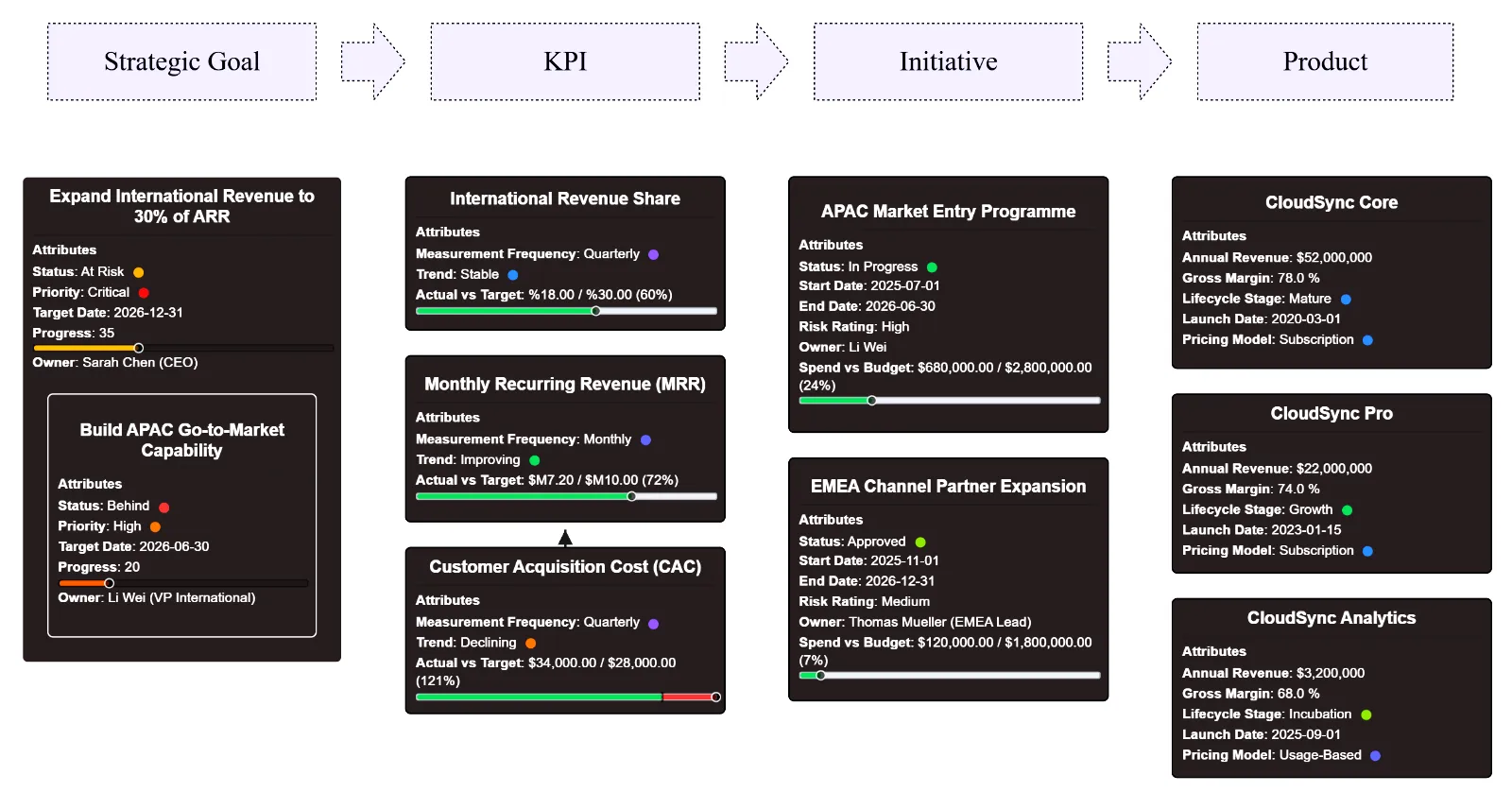
Connect strategic goals to measures, initiatives, products, owners, and investment. Trace why work exists, see where money is going, and keep plans tied to the outcomes they are meant to change.
02 Business transformation
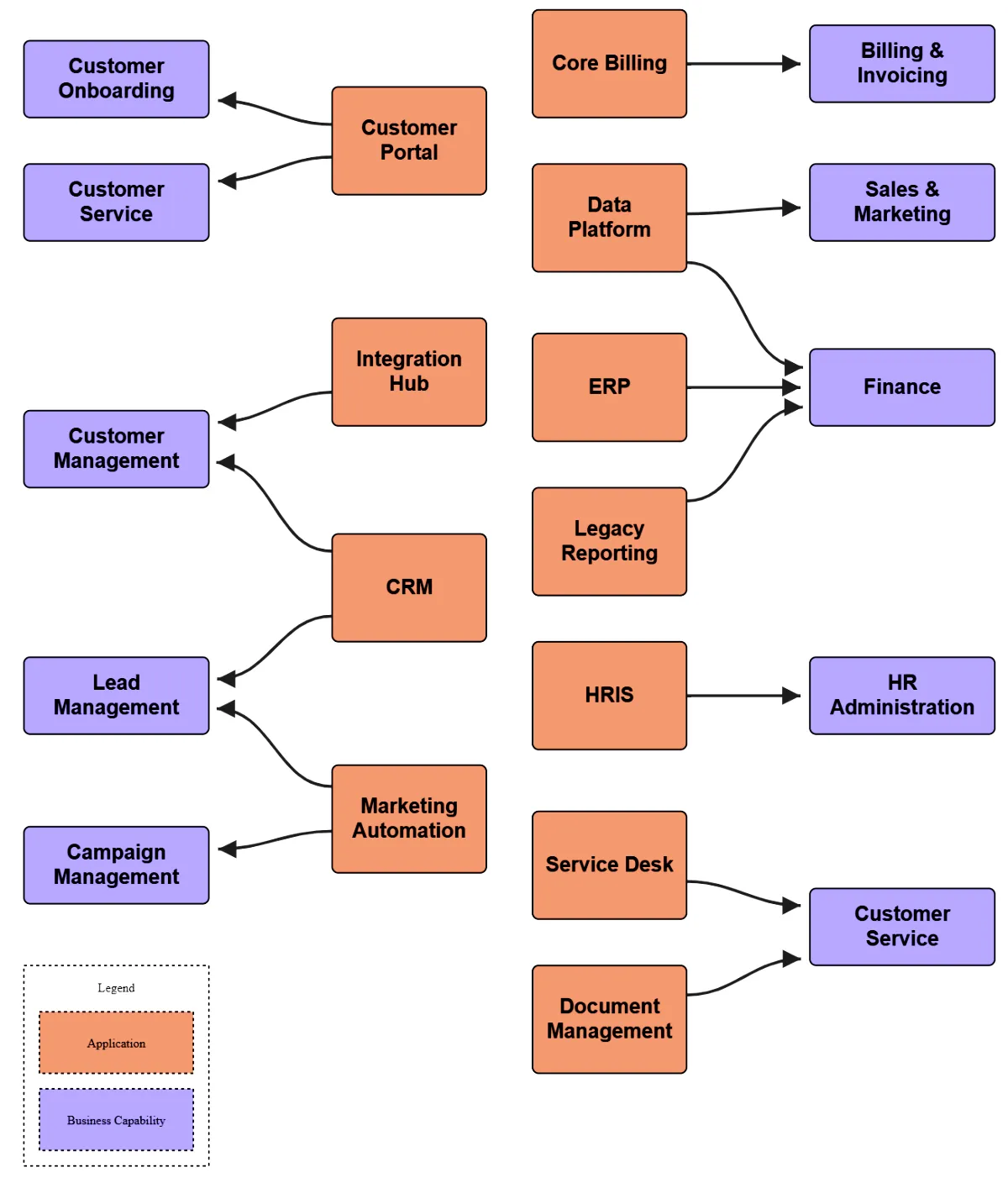
A transformation rarely belongs to one team or system. Model the capabilities you need, the initiatives improving them, and the processes, applications, information, and people that make them real.
03 Application portfolio
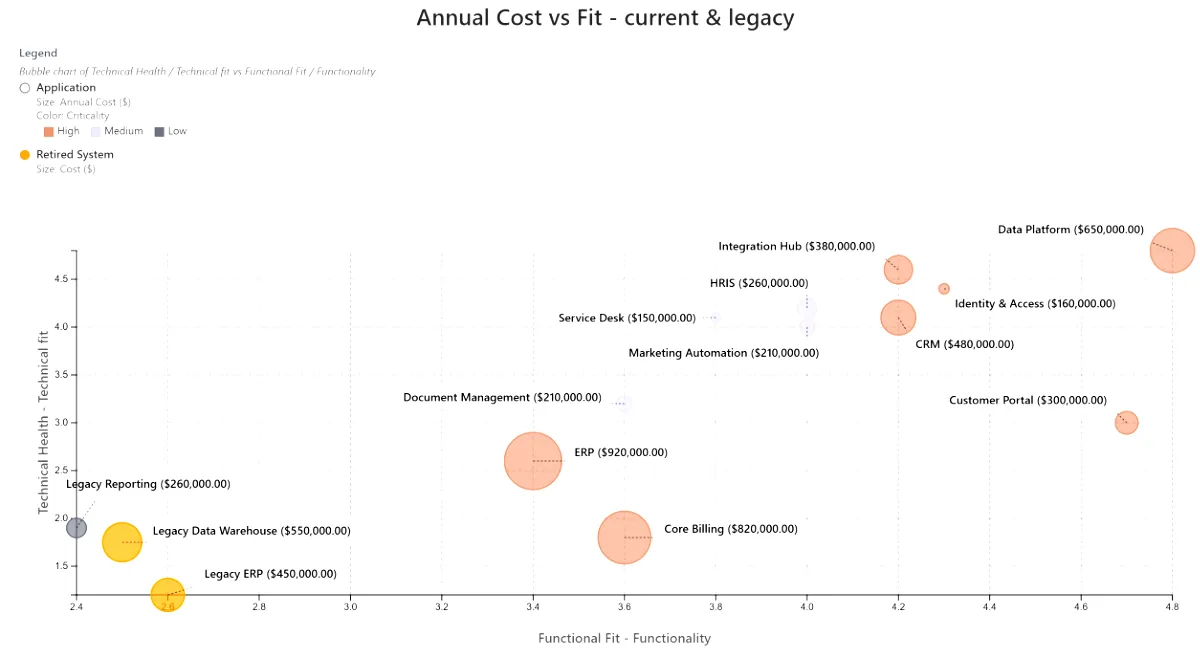
Bring cost, functional fit, technical health, lifecycle, criticality, ownership, and dependencies together. Use different views of the same portfolio to find candidates, then follow the connections before deciding.
04 Architecture change
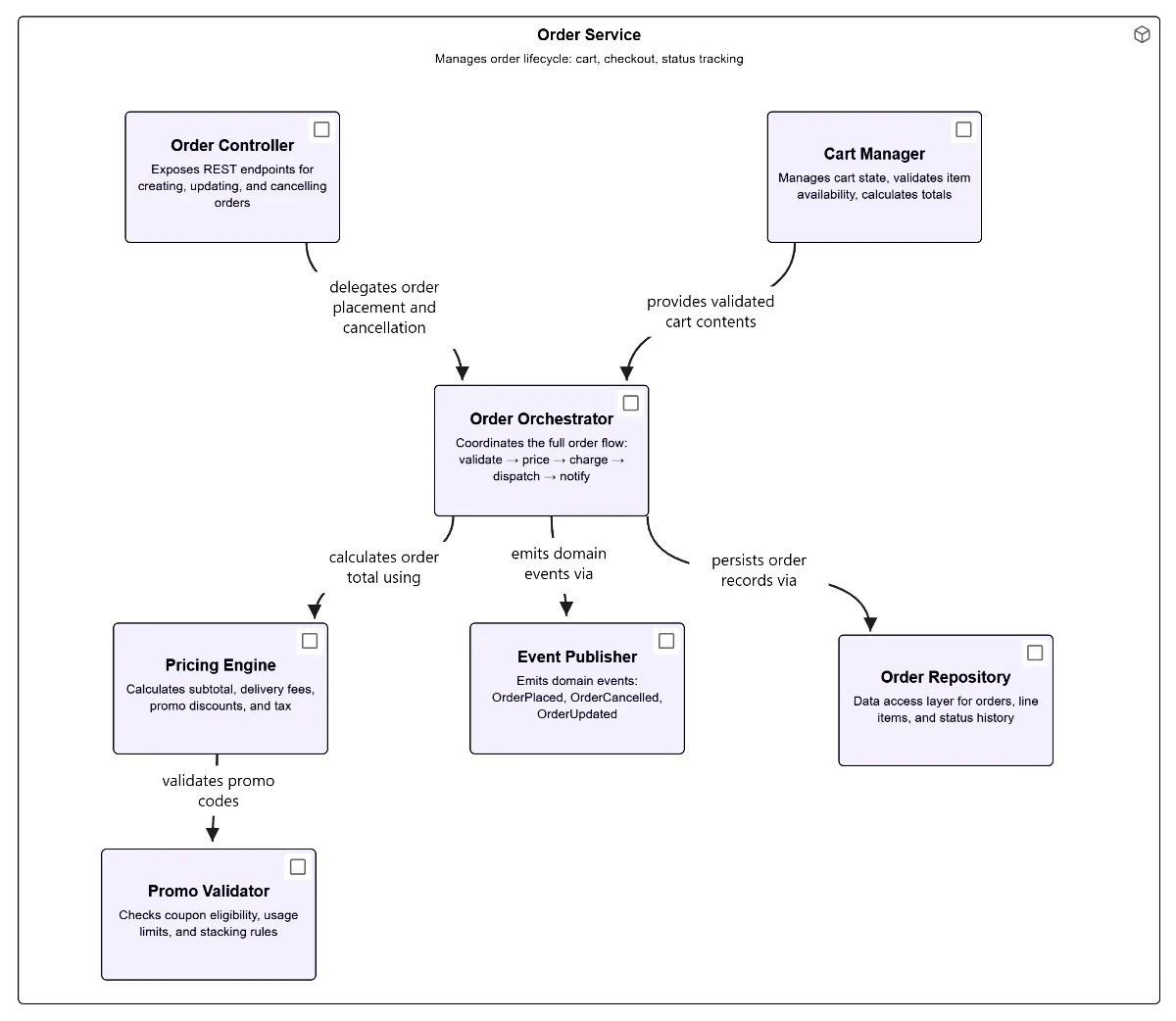
Move from enterprise and application landscapes into C4-style context, container, and component views. Keep the detail connected to the systems, capabilities, risks, and initiatives around it.
More perspectives from the model
Use familiar architecture notation when the technology matters. Use time-based analysis when the problem is how work flows.
05 Cloud architecture
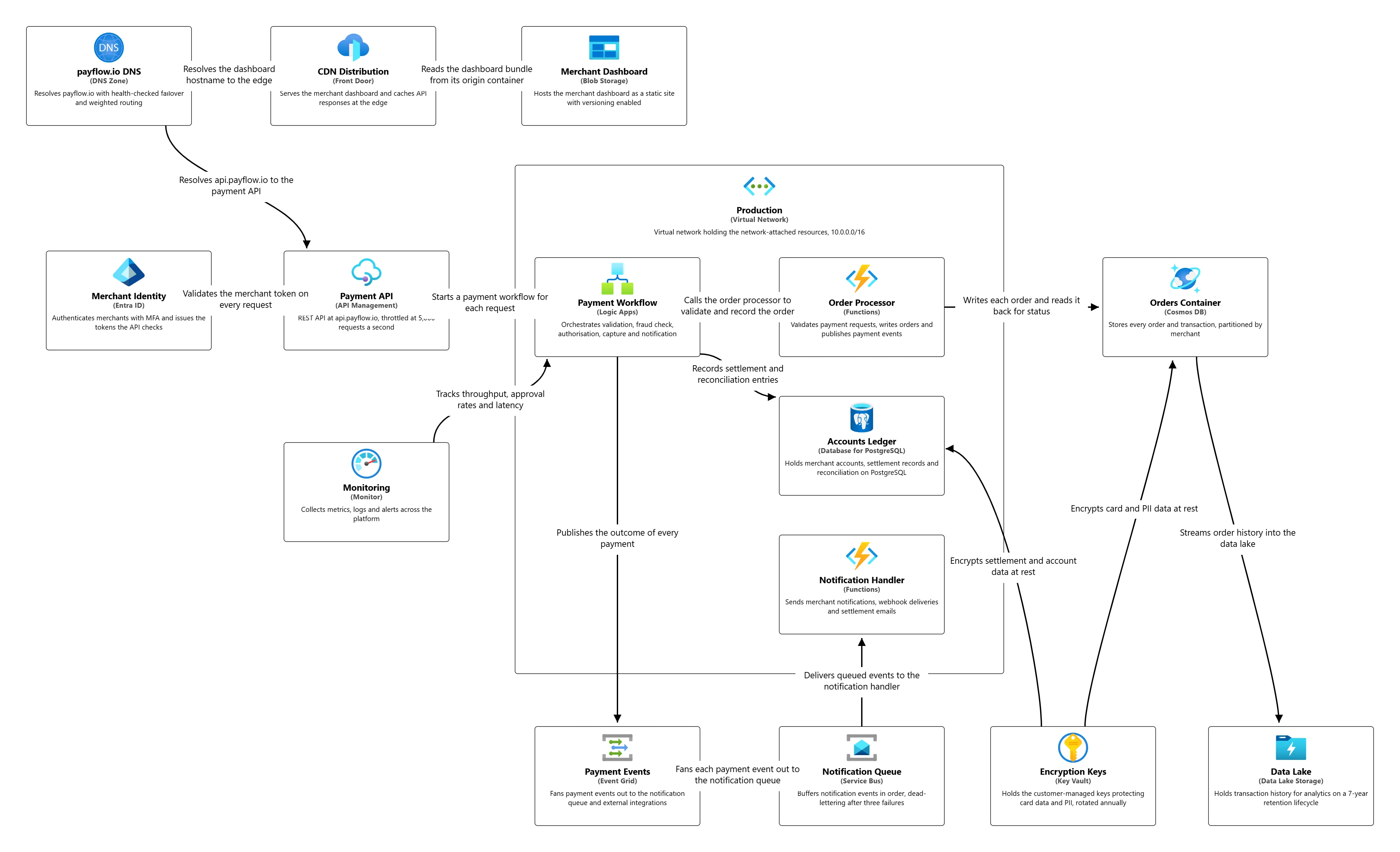
Model workloads and the services they use, with the provider icons architects recognise. Connect environment, region, ownership, criticality, and cost to the architecture instead of leaving them in a separate inventory.
This fictional Azure example uses official service icons. Planalyze also includes AWS and Google Cloud templates.
06 Value-stream improvement
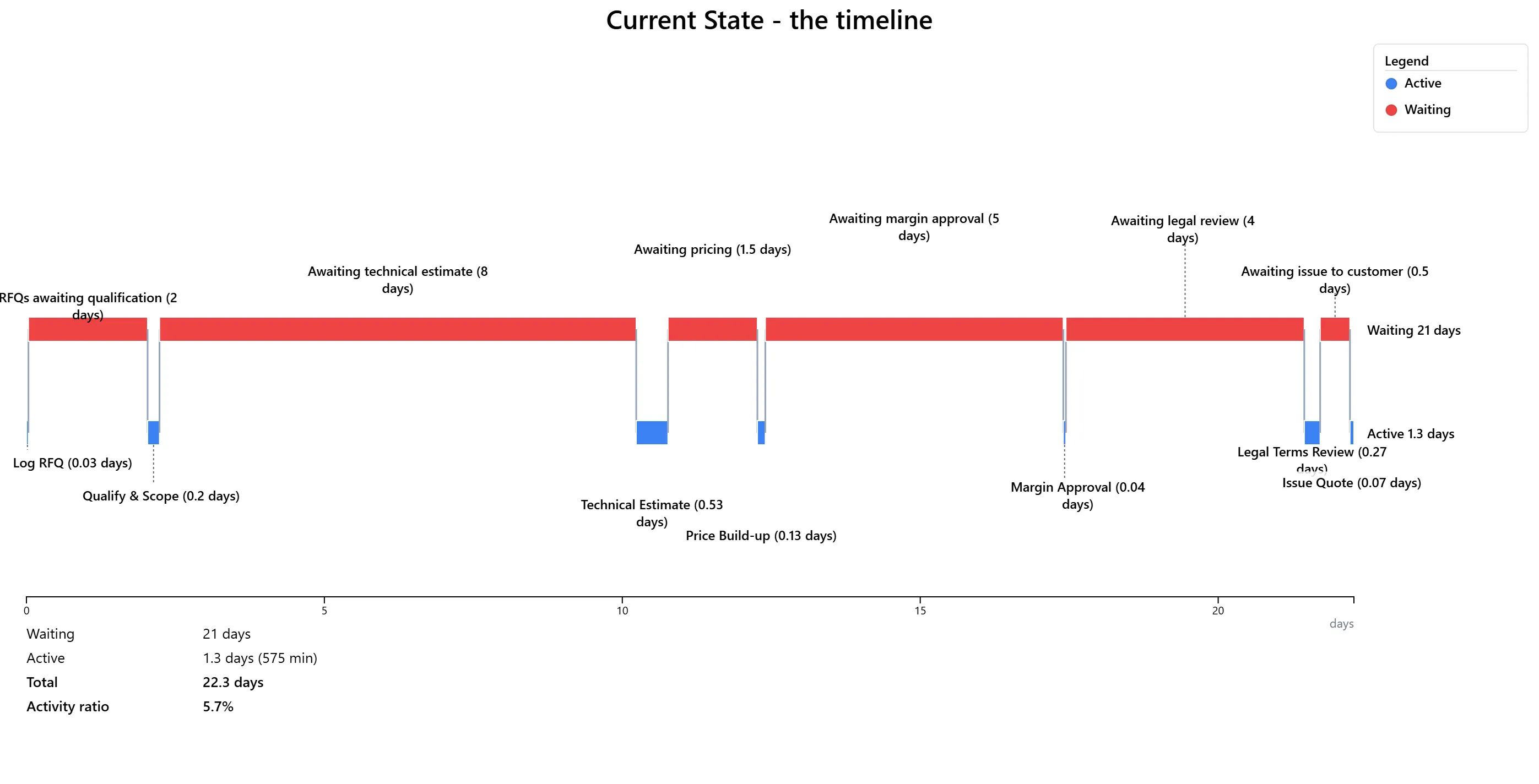
Build the current and future states from the same connected flow. The timeline separates active work from waiting and draws both to scale, so the improvement conversation is grounded in elapsed time rather than the number of boxes on a process map.
5.7% activity ratio
28.7% activity ratio
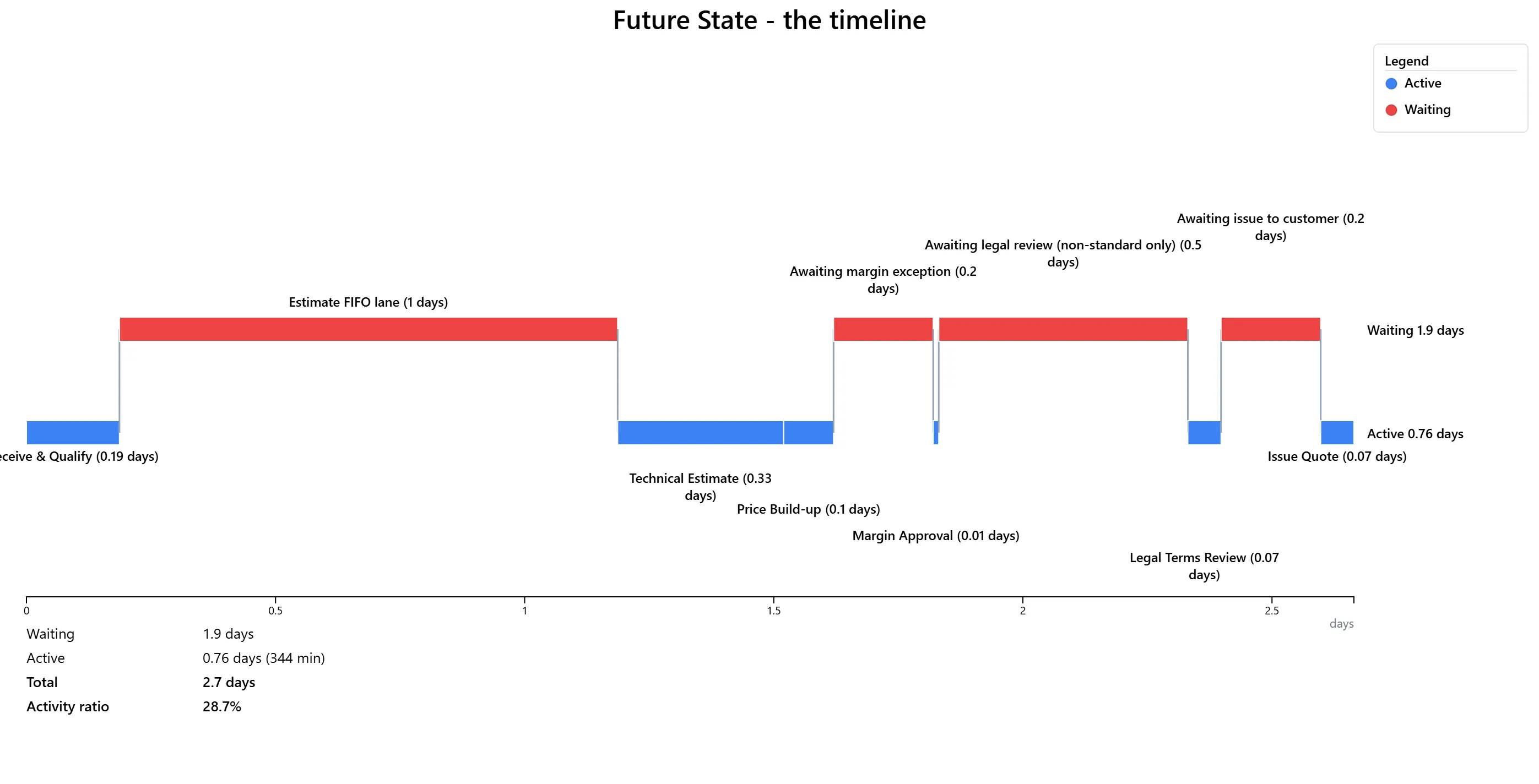
Same demand. Same model. A different flow. Lead time falls from 22.3 to 2.7 days, largely by reducing waiting between steps.
And much more
Use an established approach as a starting point, combine business and technology concepts, or define your own modelling language.
Connect risks and controls to the processes, systems, suppliers, and obligations they govern.
Bring organisation, capabilities, locations, information, and technology into a shared view.
Understand product portfolios and the shared platforms, teams, services, and investments behind them.
Define the concepts and relationships that fit the work, rather than forcing it into a preset framework.
Use the information you already have
Bring annual reports, strategy documents, spreadsheet data, or a description of the problem. Work with AI to identify useful concepts, build the model, connect the information, and keep developing it as new questions emerge.
Explore Planalyze + AIStart with what you need to understand. Build a connected model, explore the options, and create the views the conversation needs.