
How it works
Start with a problem.
Build a clearer picture.
Turn what you know into a connected model. Shape it around your world, develop it with people and AI, and use it to work out what to do next.

A 53-second overview
See the model come to life.
Follow one real-world problem from a shared modelling language to a connected model, useful views, and an AI-assisted question.
01 / Start with a problem
What needs to change?
Start with a decision, a challenge, or something you need to understand. That gives your model a purpose and helps you choose what to include.
You don’t need to map the whole organisation. Start with a useful scope, then add detail as the work develops.
02 / Define your language
Agree what things mean.
Choose the concepts, details, and connections that matter to the problem. Together, these form your metamodel — the shared language people and AI use to build the model.
Types
The kinds of things in your world.
Initiative · Capability · System
Attributes
The details you need to understand them.
Owner · Maturity · Investment
Relationships
The connections that give them context.
An initiative improves a capability.
Start with a template, adapt an established approach, or define your own. See the example metamodel
03 / Build the model
Bring the real information together.
Add the actual things you want to understand, record their details, and connect them using your modelling language.
In our simple example, Simplify onboarding is an initiative that improves the Customer onboarding capability. The Customer portal is a system that supports it.
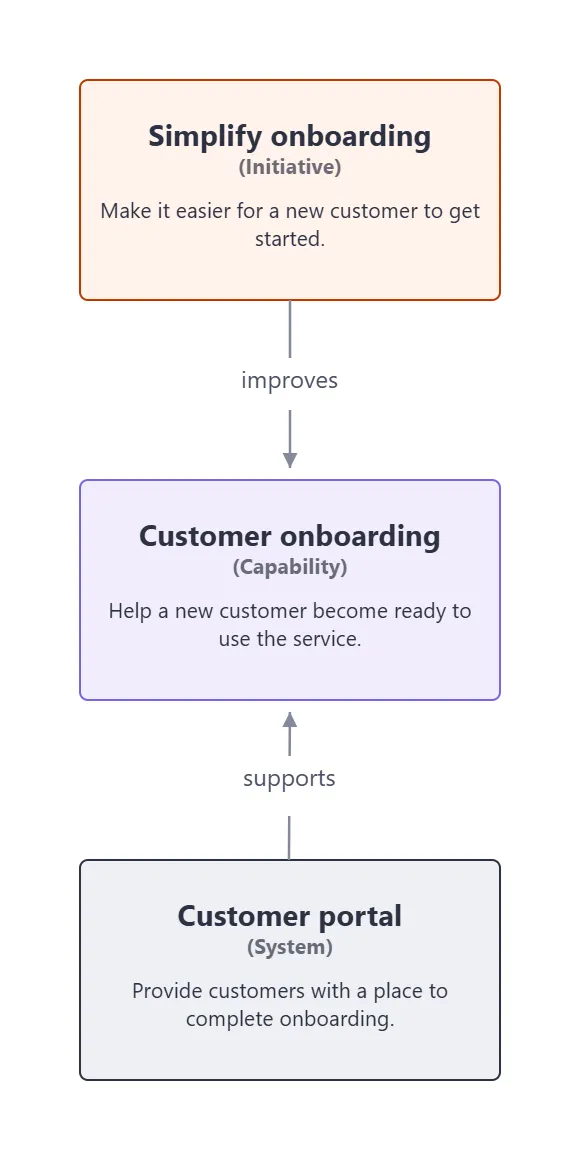
The concepts become real things in a connected model. View full-size example (opens a new tab)
04 / Explore and act
Find the view that helps you decide.
Use diagrams to follow relationships, catalogues to examine details, and charts to compare attributes. Here, the same onboarding model becomes a view for discussing which improvements deserve a closer look.
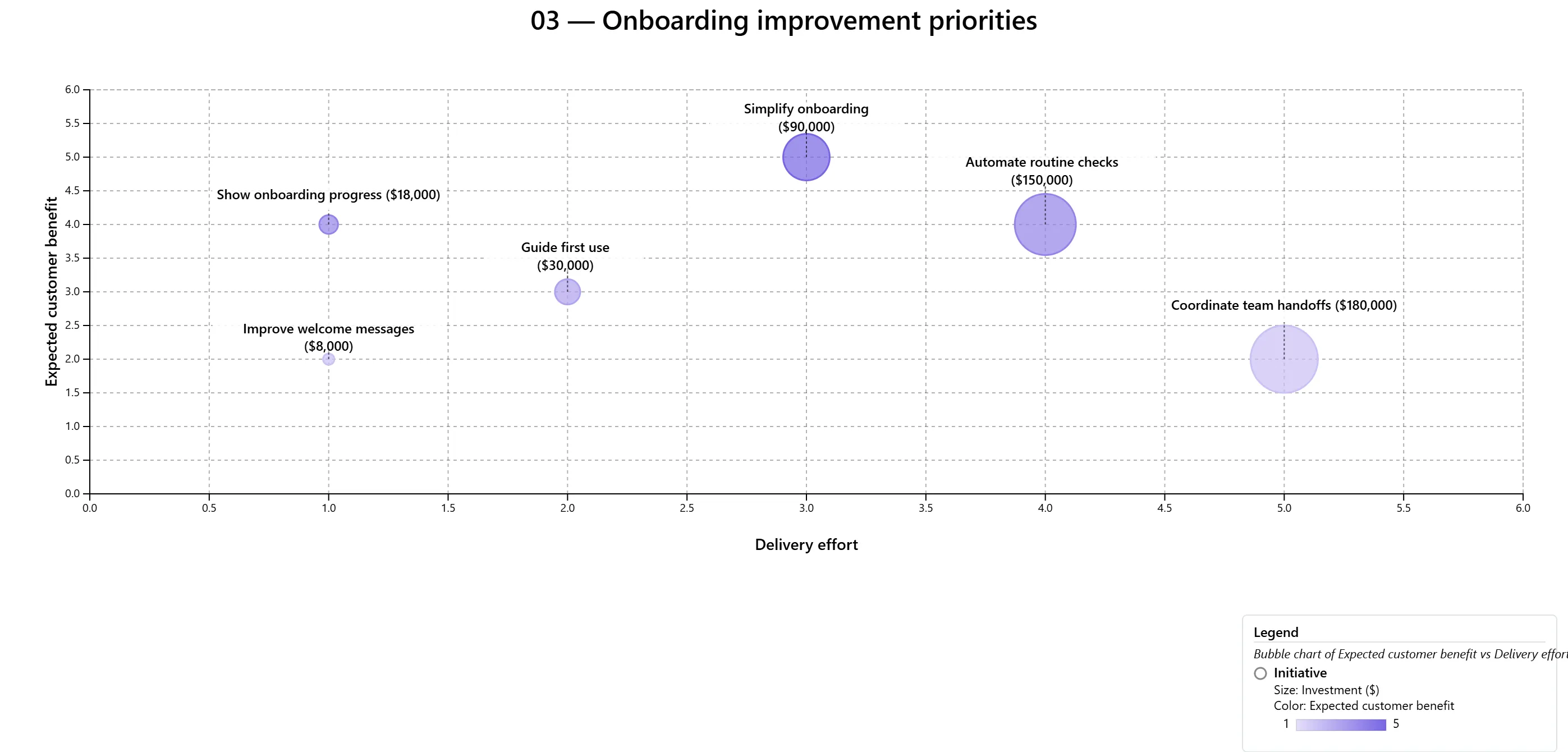
Which initiatives improve this capability?
The chart draws on the same initiatives connected to Customer onboarding in the model.
Which options deserve a closer look?
Compare expected benefit, delivery effort, and investment without losing the underlying detail.
What should we test or fund?
A focused view helps people question the assumptions and decide what to explore next.
Keep building on it
The next problem doesn’t need a blank page.
Bring in another report, update a relationship, or explore a new scenario. People and AI can return to the same living model and develop it as the world changes.
See how people and AI work togetherAI features are in beta. The built-in assistant uses your own provider key; compatible external assistants connect through MCP.
Bring a real-world problem.
Start with what you need to understand. Build a useful model, connect the information, and take the next step with a clearer picture.